WW2 Bunker
How Hitler Could Have Won World War II The Fatal Errors That Led to Nazi Defeat
How Hitler Could Have Won World War II The Fatal Errors That Led to Nazi Defeat
Author: Bevin Alexander
Condition: Good
Couldn't load pickup availability
Bevin Alexander's How Hitler Could Have Won World War II: The Fatal Errors That Led to Nazi Defeat offers a brisk, counterfactual-driven survey of the principal campaigns of 1939–45, arguing that a series of strategic missteps—foremost among them Hitler’s decision to invade the Soviet Union rather than seize the Suez and the Middle Eastern oilfields, and his declaration of war on the United States—turned what might have been German dominance into catastrophic defeat; Alexander walks readers through Dunkirk, North Africa, Barbarossa, Stalingrad, Kursk, Normandy and the Battle of the Bulge to show how relatively small alternative choices might have altered the war’s outcome.
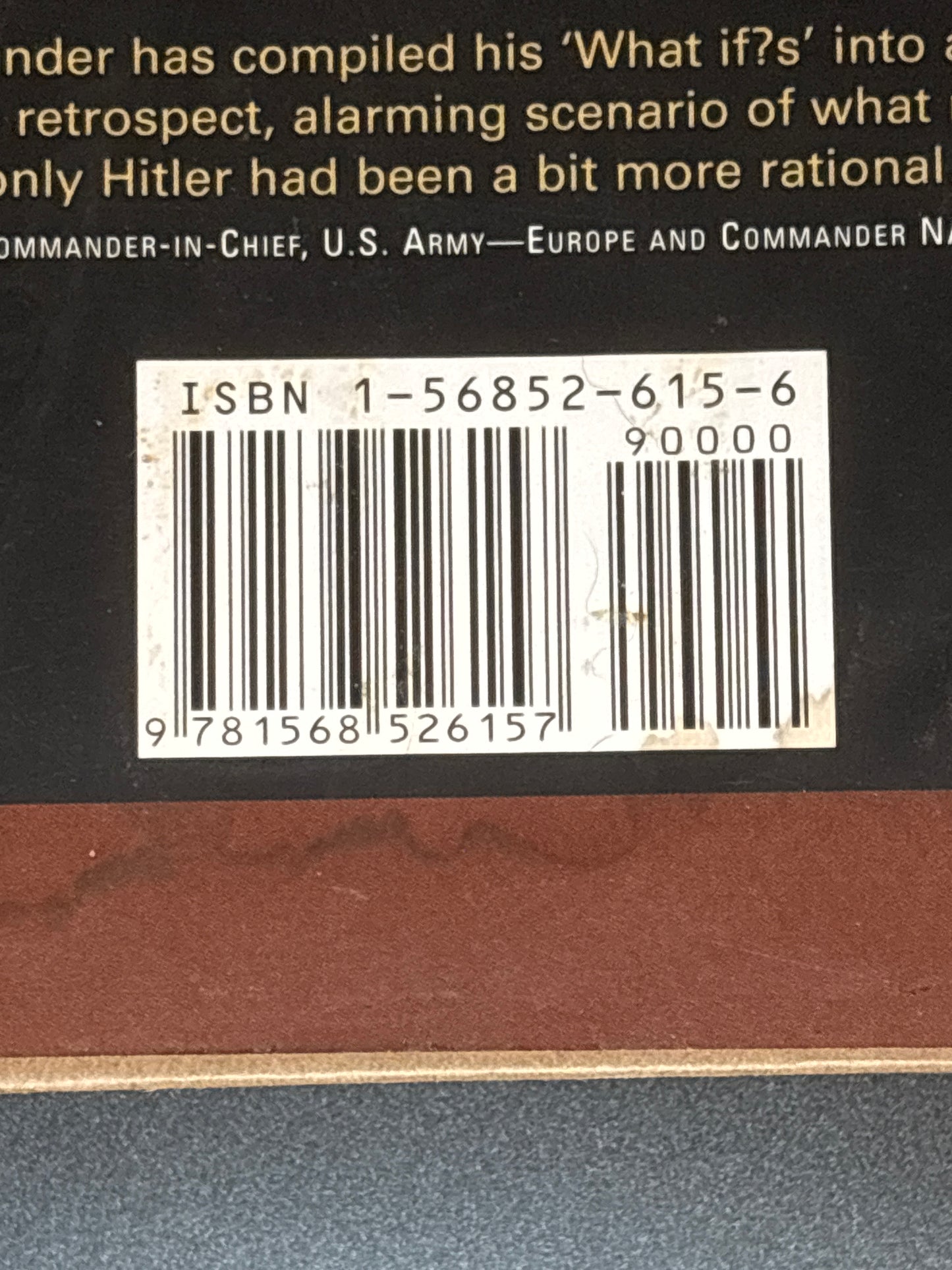
; its analysis is grounded in the author’s credentials as an American military historian and former officer who served in the Korean War and later worked as a consultant and adjunct professor, giving the study both practical military insight and academic context. Publisher: William S. Konecky Associates / Konecky & Konecky; ISBN: 9781568526157.Share
Keywords, content and topics in this Book
Keywords, content and topics in this Book
Basic bibliographic tags
How Hitler Could Have Won World War II
The Fatal Errors That Led to Nazi Defeat
Bevin Alexander
Crown Publishers
World War II history
military history
alternative strategy analysis
counterfactual analysis (military)
strategic errors
operational errors
grand strategy
campaign analysis
battlefield decision-making
Type and format of book
non-fiction
doctrinal/strategy book
strategic and operational study
historical analysis
Theaters of war covered
European Theater
Western Front
Eastern Front
North Africa
Mediterranean Theater
Atlantic (maritime and naval dimension, including blockade and sea power)
Operations, campaigns, and strategic themes
Blitzkrieg campaigns (early war)
Battle of France
Battle of Britain
Operation Barbarossa (invasion of the Soviet Union)
North African campaign
Battle of Stalingrad (as a key turning point and example of strategic error)
Battle of Moscow / failure before Moscow (German offensive in 1941)
Battle of Kursk (armor and operational decisions)
U-boat campaign / Battle of the Atlantic (strategic context)
shift to war of attrition on Eastern Front
failure to concentrate forces
two-front war
resource allocation errors (oil, industry, logistics)
Main nations and alliances involved
Germany (Nazi Germany)
Axis powers
United Kingdom
United States
Soviet Union (USSR)
Allied powers
Italy (as Axis partner in Mediterranean/North Africa context)
Focus and subject emphasis
Wehrmacht operational doctrine and practice
German high command decision-making
Hitler’s personal interference in military strategy
comparison of German and Allied strategic planning
use and misuse of mobile warfare
logistics and supply in German campaigns
air power and its strategic employment (e.g., Battle of Britain, support to ground forces)
naval strategy and sea control (including the Atlantic dimension)
strategic geography and lines of communication
Leaders and key historical figures
Adolf Hitler
German General Staff (as an institution)
Allied political and military leadership (in comparative strategic context)
Weapons, forces, and military branches (as strategic/operational elements)
German Army (Heer)
German Air Force (Luftwaffe)
German Navy (Kriegsmarine)
armored forces (tanks and mechanized units) as instruments of blitzkrieg
submarine warfare (U-boat campaign) in strategic perspective
artillery and air support in mobile operations
grand strategy vs. operational success
strategic overreach
failure to exploit victories
underestimation of opponents
ideology-driven decision-making
intelligence and miscalculation
logistics and economic constraints
command and control problems
center of gravity analysis (key theaters and resources)
counterfactual military history (within strict historical parameters)
Book Condition: Good
Book Condition: Good
You’ve reached the divisional archives. Whether you are looking for the technical blueprints of a Panzer, the gritty memoirs of an infantryman, or a bird’s-eye view of the Pacific Theater, we’ve got your intel right here. Our collection ranges from technical specs and biographies to rare photo journals and historical novels.
Before you enlist a new title into your personal library, check the Condition Report below to see how much action these volumes have seen:
New: Fresh Out of Bootcamp
Flawless and untested. This book is in pristine, new condition and ready for its first assignment.
Like New: Light Combat Experience
Almost new and in great shape. It has clearly been read before and is ready to fight again, but it shows very little wear from its time in the field.
Good: A Few Scars or Shell Shock
A reliable veteran. The book might have some bent corners or a dust cover with a few scratches, but it’s still sturdy and standing tall.
Fair: Battle-Hardened
Visible signs of a long campaign. Expect some stains, bent pages, and perhaps some minor tears on the cover. It’s seen the trenches, but the intel inside is still solid.
Poor: Survived Iwo Jima
This one has been through the meat grinder. It carries noticeable damage, heavy staining, or significant wear—but like any old soldier, it would love to be read one last time before it retires.