WW2 Bunker
World War II Map by Map
World War II Map by Map
Author: DK
Condition: Good
Couldn't load pickup availability
World War II Map by Map is a geographic retelling of the Second World War that uses cartography to reveal the scale, mobility, and strategic logic of the conflict. Arranged chronologically from the interwar slide to war through the endgame and immediate aftermath, the book traces major campaigns across Europe, Africa, Asia, and the Pacific, pairing clear narrative overviews with timelines to show how operations, diplomacy and home fronts interacted. The map‑led approach brings troop movements, supply lines and strategic turning points into sharp relief, while archival photographs, contemporary artefacts and leader profiles illuminate the human and political forces behind the maps.
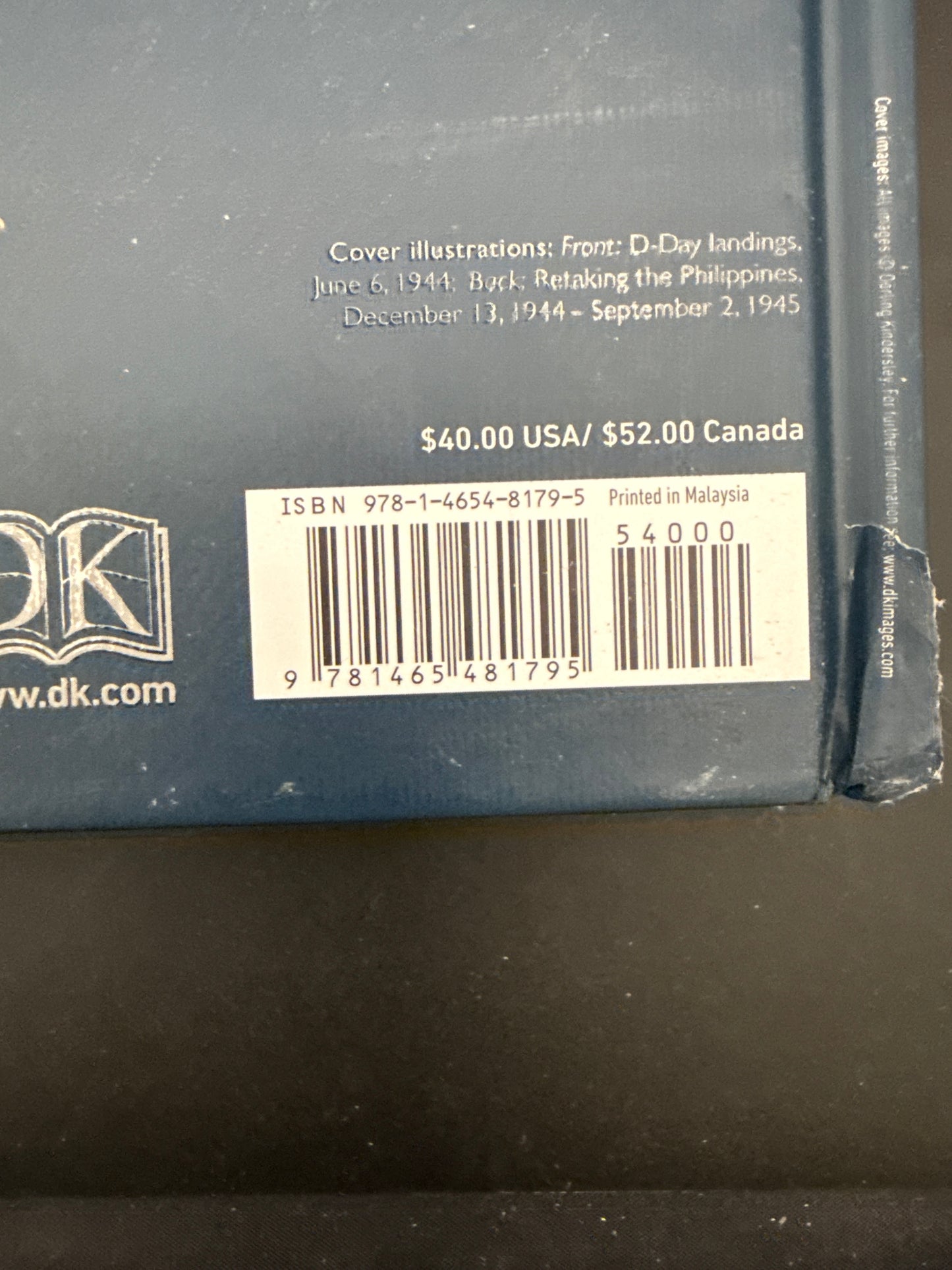
This large‑format, richly illustrated atlas contains more than 100 specially commissioned full‑color maps—campaign, battle and thematic maps—alongside 9 main contemporary maps, 30 photo feature spreads, infographics, portraits and detailed captions. Produced by DK in association with the Smithsonian, it is a multi‑author work with consulting editor Richard Overy and a foreword by Peter Snow; first American edition (2019), ISBN 9781465481795. Designed for students, general readers and military‑history enthusiasts (recommended 12+), it is part of DK’s luxurious Map by Map series and functions as both a cartographic reference and an engaging visual history.
Share
Keywords, content and topics in this Book
Keywords, content and topics in this Book
Book Identification & Type
World War II: Map by Map (Smithsonian / DK History Map by Map)
ISBN 9781465481795; First American edition 2019
Large-format, illustrated historical atlas
Cartographic reference; campaign and operations overview
Thematic maps with accompanying narrative essays
Multi-author work under consulting editor Richard Overy; foreword by Peter Snow
Geographical & Theater Coverage
Global war; worldwide operational overview
European Theater of Operations
Western Front (France, Low Countries, Germany)
Eastern Front (Germany–Soviet Union, including Leningrad, Moscow, Stalingrad, Kursk)
Balkans and Southeast Europe (Yugoslavia, Greece, Albania)
Mediterranean Theater (Italy, Sicily, North Africa littoral, Aegean)
North African campaign (Libya, Egypt, Tunisia; desert war)
Atlantic and Battle of the Atlantic (convoys, U-boat war)
Scandinavia and Arctic (Norway campaign, Finland, Winter War, Arctic convoys)
Middle East (Palestine, Iraq, Syria, Iran, Eastern Mediterranean)
Pacific Theater (Central Pacific, South Pacific, island-hopping)
East Asia (China, Manchuria, Sino‑Japanese War, Japanese rule in East Asia)
South and Southeast Asia (Burma, India in World War II, Malaya, Singapore, Dutch East Indies)
Home Fronts in Europe, USSR, USA, and Asia (bombing, occupation, political change)
Postwar Europe and Asia (Iron Curtain, Chinese Civil War, decolonization of Asia, creation of Israel)
Chronological Scope & Structure
Interwar period and slide to war, 1918–1939
Outbreak and early Axis victories, 1939–1941
Widening war and turning of the tide, 1942–1944
Endgame in Europe and the Pacific, 1944–1945
Immediate aftermath, 1945–1955 (early Cold War, decolonization, remembrance)
Key Sections / Campaign Groupings
“The Slide to War 1918–1939”
Legacy of World War I; Versailles settlement; border changes
League of Nations and mandate system
Rise of dictatorships: Italy, Germany, Balkans, Iberia
Hitler and Nazi Germany; Nazi seizure of power
China in turmoil; warlord era; Nationalist–Communist conflict
Japanese expansion in Manchuria and North China
Spanish Civil War maps and international intervention
German and Italian expansion: Rhineland, Austria, Sudetenland, Czechoslovakia, Albania
Kristallnacht and anti‑Jewish persecution
Countdown to war; Axis formation; Nazi–Soviet Pact; divided Europe
“Germany Triumphant 1939–1941”
Invasion and partition of Poland; destruction of Poland
Winter War in Finland and Soviet absorption of Baltic and Black Sea states
German campaign in Norway and Denmark
Offensive in the West: Netherlands, Belgium, France
Blitzkrieg concept and operations
Dunkirk evacuation
Fall and division of France; Vichy France and Free French in Africa
Battle of Britain and Operation Sea Lion planning
The Blitz on British cities and civil defense
Battle of the Atlantic and early U‑boat war; sinking of Royal Oak and Bismarck
Britain at bay; Home Guard; total war economy
US neutrality, rearmament, and diplomatic shift
“The Widening War 1942–1943” (and related sections)
US–Japan entry into war; Pearl Harbor; Japanese advances
Pacific and Asian operations: Philippines, Singapore, Burma, China
North African desert campaigns (Rommel, El Alamein, Operation Torch)
Eastern Front: Barbarossa, Leningrad, Moscow, Stalingrad, Kursk
Holocaust overview, Warsaw ghetto, massacres in the east
Prisoners of war; resistance movements; code‑breaking; bombing campaigns
“Turning the Tide 1943–1944”
Summit conferences (Casablanca, Tehran, etc. represented in maps)
Allied invasions of Sicily and Italy; Anzio; Gothic Line
Defeat of the U‑boats; battle against German war industry
European resistance and plots against Hitler
Operation Bagration and Soviet offensives westward
Warsaw uprising; battles at Germany’s borders
D‑Day landings; Omaha Beach; Normandy campaign; breakout
V‑weapons and rocket attacks
Operation Market Garden and fighting in the Low Countries
Pacific: Operation Cartwheel, island‑hopping, Marianas, Leyte Gulf, kamikaze, Burma, China–Japan war
“Endgame and Aftermath 1944–1955”
Allied victory in Europe; crossing the Rhine; fall of Berlin
Battle of the Bulge
Yalta and Potsdam conferences
Germany’s air war defeat; Dresden bombing
Final struggles in Italy; VE Day
Retaking the Philippines; Iwo Jima; Okinawa
Manhattan Project; Hiroshima and Nagasaki; bombing of Japan
Peace in the Pacific; VJ Day
Postwar reconstruction; Iron Curtain; Chinese Civil War
Decolonization of Asia; creation of Israel
Human and material cost of war; remembrance
Operations, Campaigns & Battles (explicitly mapped)
Invasion of Poland; Battle of the Bzura
Winter War (Finland vs USSR); Mannerheim Line operations
German invasions of Denmark and Norway; Battles of Narvik
Battle of the River Plate
German offensives in the Low Countries and France, 1940
Blitzkrieg operations in Western Europe
Dunkirk evacuation (Operation Dynamo)
Battle of France, including collapse of the Maginot Line
Attacks on French fleet at Mers‑el‑Kébir and Dakar raid
Battle of Britain; Eagle Attacks; Channel battle
The Blitz on London, Coventry and other British cities
Battle of the Atlantic and key convoy battles (HX convoys, wolf packs)
Bismarck sortie and sinking; Admiral Graf Spee cruise
Spanish Civil War battles (e.g., Ebro, Teruel) as prelude
Sino‑Japanese War operations; Japanese invasion of Manchuria and North China
Marco Polo Bridge incident; fall of Nanjing; battles around Hankou
Japanese conquests: Pearl Harbor (mapped), Philippines, Malaya, Singapore, Burma, East Indies
Key Pacific battles: Midway, Guadalcanal, Marianas, Leyte Gulf, Iwo Jima, Okinawa
German invasion of USSR (Operation Barbarossa); drives on Leningrad and Moscow
Siege of Leningrad; relief of Moscow
Battle of Stalingrad and encirclement
Battle of Kursk
North African desert war: entry of Rommel; see‑saw battles; El Alamein; Operation Torch
Siege of Malta; Mediterranean naval and air operations
Italian campaign: Sicily invasion; landings at Salerno and Anzio; Gothic Line
Strategic bombing campaigns: day and night bombing; Dresden
Code‑breaking efforts (Enigma and Ultra context)
Resistance operations in occupied Europe; Warsaw uprising
Allied conferences and high‑level diplomacy (mapped): e.g., Yalta, Potsdam
Operation Overlord / D‑Day; Normandy landings and breakout
Operation Market Garden; Arnhem
Operation Bagration and Soviet offensives through Eastern Europe
Battle of the Bulge (Ardennes Offensive)
Crossing of the Rhine
Final Soviet assault on Berlin
Atomic bombing missions against Hiroshima and Nagasaki
Nations & Alliances (as covered in maps)
Germany (Third Reich; occupied territories; Greater Germany)
Italy (Fascist Italy; Italian Empire in Africa; co‑belligerent, 1943–45)
Japan (Imperial Japan; Greater East Asia Co‑Prosperity Sphere)
Soviet Union / USSR
United Kingdom and British Empire / Commonwealth
France (Third Republic, Vichy France, Free French)
United States of America
Poland (Second Polish Republic; partition and occupation)
China (Republic of China; Nationalists and Communists)
Finland, Estonia, Latvia, Lithuania
Belgium, Netherlands, Luxembourg
Norway, Denmark, Sweden
Spain and Portugal (including Spanish Civil War; Spanish “non‑belligerence”)
Yugoslavia, Greece, Albania, Bulgaria, Romania, Hungary
Turkey, Iran, Iraq, Syria, Lebanon, Egypt, Palestine, Transjordan
India (British India), Burma, Malaya, Singapore
Australia, New Zealand, Canada, South Africa, African colonies
Latin American and Caribbean states in hemispheric defense context
Axis vs Allies mapping; neutral states; co‑opted or occupied territories
Visual & Cartographic Content
More than 100 specially commissioned, full‑color maps
Campaign, battle, and theater maps with troop movements and front lines
Thematic maps: political borders, occupation zones, economic resources, casualties
Contemporary wartime situation maps and charts reproduced
Extensive photographs (battlefields, leaders, civilians, equipment)
Infographics and diagrams (e.g., timelines, production, losses, political changes)
Portraits and posters (propaganda, recruitment, morale)
Glossary, index, and acknowledgments
Focus & Thematic Coverage
Grand strategy and operations visualized through maps
Political and diplomatic developments (interwar settlements, alliances, pacts)
Rise of Fascism and Nazism; authoritarian regimes
Economic and industrial dimensions of war (war industries, resources, oil, shipping)
Occupation policies and new orders in Europe and Asia
Resistance movements and partisan warfare in Europe
Naval warfare and maritime logistics (convoys, U‑boats, carrier warfare)
Air power: strategic bombing, air superiority battles, V‑weapons
Desert warfare; amphibious operations; island‑hopping
Home fronts, civil defense, evacuations, rationing
Genocide and persecution: Holocaust overview; Kristallnacht; Warsaw ghetto; massacres in the east
War crimes and civilian suffering (Nanjing massacre, bombing of cities)
Postwar realignment: borders, spheres of influence, early Cold War
Decolonization and emergence of new states after 1945
Remembrance and memorialization of World War II
Named Leaders & Historical Figures (featured in text/maps)
Adolf Hitler
Benito Mussolini
Joseph Stalin
Winston Churchill
Franklin D. Roosevelt
Charles de Gaulle
Neville Chamberlain
Hermann Göring
Joseph Goebbels
Joachim von Ribbentrop
Vyacheslav Molotov
Heinrich Himmler (in context of Nazi state and persecution)
Erwin Rommel
Albert Speer
Montgomery, Patton (North African / Mediterranean campaigns)
Hideki Tojo and Japanese high command (as part of Japan’s war leadership)
Chiang Kai‑shek; Mao Zedong (Chinese conflict)
Francisco Franco (Spanish Civil War and WWII policy)
Haile Selassie (Italian invasion of Ethiopia)
Woodrow Wilson, Georges Clemenceau, David Lloyd George (Versailles / interwar maps)
Weapons, Vehicles & Military Technology (significant in the book’s maps/narrative)
German panzers and mechanized forces (Blitzkrieg campaigns)
Submarines / U‑boats (Unterseeboote) in the Atlantic
German battleships and cruisers (Bismarck, Admiral Graf Spee, Scharnhorst, Gneisenau)
Aircraft carriers and naval aviation (e.g., HMS Ark Royal, carrier‑borne aircraft)
German Luftwaffe bombers and fighters (Battle of Britain, Blitz)
RAF fighters (Hawker Hurricane, Supermarine Spitfire as classes of aircraft)
V‑weapons: V‑1 flying bomb, V‑2 rocket (mapped as “V‑weapons”)
Heavy bombers used in strategic bombing (generic type level, not specific serials)
Atomic weapons (Manhattan Project; Hiroshima and Nagasaki)
Convoy escorts and merchant shipping (Liberty ships, convoy system)
Civilian & Social Aspects
Civilian evacuation (e.g., British children; French civilians in 1940)
Urban bombing and its effects on cities (London, Coventry, Hamburg, Dresden, Tokyo, etc.)
Refugee movements and population displacements in Europe and Asia
Occupation regimes and collaboration (Vichy France, Axis‑occupied Europe)
Rationing, shortages, and total war economies
Forced labor, deportations, and mass killing in Eastern Europe
Jewish persecution, ghettos, and deportation to killing sites (Holocaust overview maps)
Postwar border changes and expulsions; refugee crises
Memorials, remembrance and commemorative practices
Classification Tags (for cataloging/search)
World War II—Atlases
World War II—Maps
World War II—Campaigns—Maps
World War II—Military geography
World War II—Operations—Pictorial works
Military history—Cartographic works
Strategy—Maps
Naval warfare—Atlantic Ocean—Maps
Aerial operations, World War II—Maps
Eastern Front (World War II)—Maps
Pacific Area—World War II—Maps
Holocaust, 1939–1945—Historical geography
Postwar reconstruction—Europe—Maps
Decolonization—Asia—Maps
Book Condition: Good
Book Condition: Good
You’ve reached the divisional archives. Whether you are looking for the technical blueprints of a Panzer, the gritty memoirs of an infantryman, or a bird’s-eye view of the Pacific Theater, we’ve got your intel right here. Our collection ranges from technical specs and biographies to rare photo journals and historical novels.
Before you enlist a new title into your personal library, check the Condition Report below to see how much action these volumes have seen:
New: Fresh Out of Bootcamp
Flawless and untested. This book is in pristine, new condition and ready for its first assignment.
Like New: Light Combat Experience
Almost new and in great shape. It has clearly been read before and is ready to fight again, but it shows very little wear from its time in the field.
Good: A Few Scars or Shell Shock
A reliable veteran. The book might have some bent corners or a dust cover with a few scratches, but it’s still sturdy and standing tall.
Fair: Battle-Hardened
Visible signs of a long campaign. Expect some stains, bent pages, and perhaps some minor tears on the cover. It’s seen the trenches, but the intel inside is still solid.
Poor: Survived Iwo Jima
This one has been through the meat grinder. It carries noticeable damage, heavy staining, or significant wear—but like any old soldier, it would love to be read one last time before it retires.